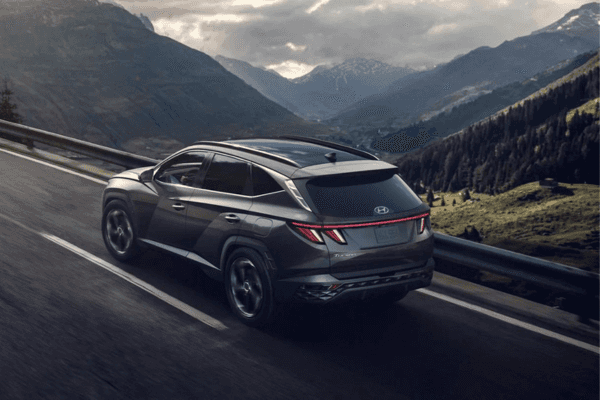
Choosing your next SUV involves more than comparing exterior styling, passenger space, and technology. Fuel economy and long-term ownership costs can also make a meaningful difference, especially if you spend a lot of time commuting, running errands, or traveling throughout Eastern North Carolina. For drivers considering a new Hyundai SUV, one important decision is whether to choose the gas-powered Hyundai Tucson or the Hyundai Tucson Hybrid.
Both versions of the 2026 Hyundai Tucson offer practical interior space, modern technology, and everyday versatility. However, they differ in how they deliver power, how much fuel they use, and what you can expect to pay upfront. The traditional gas model may appeal to shoppers who want a straightforward SUV, while the hybrid offers improved fuel economy and additional power from its combined gasoline engine and electric motor.
So, which option makes the most sense for New Bern drivers? Understanding the differences between the two powertrains can help you decide which Tucson better fits your driving habits, budget, and plans for the years ahead.
The biggest difference between these two SUVs is their powertrain. Although they share the Tucson name and much of the same overall design, their engines and transmissions work differently.
The standard gas-powered 2026 Hyundai Tucson uses a 2.5-liter four-cylinder engine producing 187 horsepower and 178 lb-ft of torque. It pairs with an eight-speed automatic transmission, providing a familiar driving experience for people who prefer a traditional gasoline-powered vehicle.
Front-wheel drive comes standard on the gas Tucson, while Hyundai’s HTRAC all-wheel-drive system is available on select configurations. This gives shoppers the flexibility to choose between a front-wheel-drive SUV for everyday driving and an all-wheel-drive model for additional traction when road conditions require it.
The gas-powered Tucson is a practical choice for drivers who want a comfortable compact SUV without prioritizing maximum fuel efficiency. It also provides a familiar ownership experience for people who have previously driven conventional gasoline vehicles.
The 2026 Hyundai Tucson Hybrid combines a 1.6-liter turbocharged four-cylinder gasoline engine with an electric motor. Together, the system produces a manufacturer-rated 231 horsepower and 271 lb-ft of torque.
That added output gives the hybrid an advantage in both horsepower and torque compared with the standard gas model. The hybrid uses a six-speed automatic transmission rather than the eight-speed transmission found in the conventional Tucson.
The electric motor can assist the gasoline engine during acceleration and help the SUV use less fuel under suitable driving conditions. Regenerative braking captures some of the energy normally lost during braking and uses it to recharge the hybrid battery.
Unlike a plug-in hybrid, the standard Tucson Hybrid does not need to be connected to an external charger. Its battery recharges through the vehicle’s hybrid system, so drivers can continue using ordinary gasoline stations without changing their daily routines.
For drivers interested in improved fuel economy without switching to a fully electric vehicle, the Tucson Hybrid provides a useful middle ground.
Fuel economy is one of the most important considerations when comparing these two powertrains. The 2026 Tucson Hybrid delivers substantially better EPA-estimated mileage than the conventional gas model, although the exact numbers depend on the drivetrain and hybrid trim selected.
| 2026 Hyundai Tucson Configuration | City MPG | Highway MPG | Combined MPG |
|---|---|---|---|
| Tucson Gas FWD | 25 | 33 | 28 |
| Tucson Gas AWD | 24 | 30 | 26 |
| Tucson Hybrid SE FWD | 40 | 35 | 38 |
| Tucson Hybrid SE AWD | 38 | 38 | 38 |
| Tucson Hybrid SEL Convenience AWD | 36 | 37 | 36 |
Source: Hyundai’s published EPA estimates for the 2026 model year. Figures are for comparison purposes only. Actual mileage varies with trim, equipment, driving conditions, traffic, weather, driving habits, and vehicle condition.
These figures show why the hybrid deserves consideration if you want to reduce the amount of time and money spent refueling. The front-wheel-drive gas Tucson is rated at 28 mpg combined, compared with 38 mpg combined for the front-wheel-drive Tucson Hybrid SE. That represents a difference of 10 miles per gallon.
The all-wheel-drive comparison is also significant. The conventional gas Tucson with AWD is rated at 26 mpg combined, while the Tucson Hybrid SE with AWD is rated at 38 mpg combined. Some higher hybrid trims have a lower combined rating of 36 mpg, so it is important to compare the specific configurations you are considering.
Your potential fuel savings depend on how many miles you drive each year and how much you pay for gasoline. Consider a driver who travels 12,000 miles annually and consistently achieves the EPA combined ratings for two front-wheel-drive models.
At an illustrative gasoline price of $3.00 per gallon, that difference would equal approximately $339 in annual fuel savings. If you drive more than 12,000 miles per year, your potential savings could be greater. If you drive relatively few miles, the difference would generally be smaller.
This example is not a guarantee of savings or a prediction of current local fuel prices. Your actual results will depend on the price of gasoline and your real-world fuel economy.
Driving conditions throughout New Bern and Eastern North Carolina can influence which powertrain makes the most sense. Daily routines may include short trips through town, commuting along US-70 or US-17, traveling to nearby communities, and making longer drives toward the North Carolina coast.
If you frequently drive through town, make multiple stops throughout the day, or spend time in slower traffic, the Tucson Hybrid may be particularly appealing. Hybrid systems can use electric motor assistance and regenerative braking to improve efficiency in conditions where conventional vehicles typically consume more fuel.
For example, a driver who makes several trips to the grocery store, takes children to school, commutes to work, and runs other errands may appreciate the hybrid’s ability to reduce gasoline consumption across repeated short journeys.
However, short trips in cold weather can affect fuel economy because the gasoline engine may need to run more often to warm up the vehicle and maintain cabin comfort. Your actual results will depend on the length of each trip and the conditions in which you drive.
Drivers who regularly travel between New Bern, Havelock, Jacksonville, or other Eastern North Carolina destinations may benefit from the hybrid’s fuel efficiency on longer commutes as well. The conventional gas Tucson’s 33 mpg highway estimate for FWD is respectable, but the hybrid SE FWD is rated at 35 mpg highway.
The difference becomes more pronounced when comparing combined fuel economy, which accounts for a mix of city and highway driving. The hybrid’s advantage can be especially useful for drivers who combine local errands with frequent regional travel.
On the other hand, someone who drives relatively few miles each year may not save enough on gasoline to justify paying substantially more for a hybrid. In that situation, comparing purchase prices and available offers becomes particularly important.
Fuel economy is not the only reason to consider the hybrid. Its combined 231 horsepower and 271 lb-ft of torque exceed the standard Tucson’s 187 horsepower and 178 lb-ft of torque.
That additional output can make the hybrid appealing to drivers who value responsive acceleration when merging onto a highway, entering faster-moving traffic, or passing slower vehicles when conditions allow. The electric motor can provide additional assistance during acceleration, while the turbocharged gasoline engine contributes to the combined system’s performance.
The standard gas Tucson still offers suitable performance for everyday driving. Its conventional powertrain may be all you need for commuting, errands, and occasional trips around the region.
Ultimately, published specifications only tell part of the story. Transmission behavior, acceleration response, road noise, seating comfort, and visibility can all affect how a vehicle feels behind the wheel. Driving both versions is a practical way to decide which one suits you.
The gas Tucson may be the better option if your primary objective is to minimize the initial purchase price. A conventional model can provide the space and everyday versatility of a compact SUV without requiring you to pay for a hybrid powertrain.
The Tucson Hybrid generally carries a higher starting price than a comparable conventional model. However, the difference between individual vehicles depends on trim level, optional equipment, dealer pricing, financing terms, and available incentives.
Rather than comparing only the advertised starting prices, look at the actual vehicles you would purchase. A well-equipped gas Tucson and a similarly equipped hybrid may have a different price gap from the difference between their base models.
To estimate long-term value, consider the following factors:
A simple break-even calculation can help. Divide the hybrid’s additional purchase cost by your estimated annual fuel savings. The result approximates how many years of fuel savings would be needed to offset that price difference, before accounting for financing, resale value, maintenance, or changes in gasoline prices.
For instance, if the hybrid cost $2,000 more and saved $400 annually on fuel, the fuel savings alone would take approximately five years to equal the additional purchase price. This is an illustrative calculation, not a quote or a prediction of your individual savings.
Comparing the final purchase prices and expected ownership costs can help you determine whether the hybrid’s efficiency is worth the additional investment for your situation.
Both versions of the Hyundai Tucson require regular maintenance. Oil and filter changes, tire rotations, tire inspections, brake inspections, and other scheduled services remain important regardless of which powertrain you choose.
The gas model has a conventional gasoline engine and automatic transmission. The hybrid adds an electric motor, a high-voltage battery, and associated hybrid-system components. That means the two vehicles have different powertrain systems, but it does not automatically mean one will cost more to maintain in every situation.
Hybrid regenerative braking can reduce reliance on the friction brakes under some driving conditions. Actual brake wear depends on driving habits, terrain, traffic, and how the vehicle is used. Neither powertrain eliminates the need for routine inspections and replacement of worn components.
When evaluating a new Tucson, review the applicable warranty terms and factory-recommended maintenance schedule. Warranty coverage, exclusions, and mileage limits can vary by component and vehicle use, so the terms for your particular model should guide your decision.
Hyundai of New Bern provides vehicle maintenance and repair services through its service center. Keeping up with scheduled maintenance helps you monitor the condition of your vehicle and address developing issues before they become more significant problems.
The decision between the gas Tucson and Tucson Hybrid does not have to mean sacrificing the type of compact SUV experience you want. Both powertrains are designed for everyday driving, with a focus on passenger comfort, cargo versatility, and contemporary technology.
Depending on the trim, Tucson models offer features such as a touchscreen infotainment system, smartphone connectivity, driver-assistance technologies, and available comfort upgrades. Specific equipment varies, so check the feature list for the exact vehicle you plan to purchase.
Consider how you normally use your SUV. Families may place a high priority on rear-seat comfort, cargo space for groceries and luggage, and convenient technology. Commuters may care more about fuel economy, seat comfort, and how easily the vehicle handles everyday traffic.
The hybrid’s additional power may be attractive if you want stronger acceleration alongside improved fuel economy. The gas Tucson remains worth considering if you prefer its purchase price, find a particular trim that better fits your needs, or simply prefer its driving characteristics.
For a closer look at the model’s features and available configurations, visit the 2026 Hyundai Tucson model page.
The right choice ultimately depends on which factors matter most to you. Neither powertrain is automatically the best option for every driver, and the value of improved fuel economy depends on how you use your vehicle.
For many New Bern drivers, the 2026 Hyundai Tucson Hybrid stands out because it combines stronger system output with substantially improved EPA-estimated fuel economy. Its advantages may be especially valuable for people who accumulate significant mileage or regularly travel through a mixture of local streets and highways.
The gas-powered Tucson remains a compelling alternative for buyers who prioritize the initial purchase price, drive fewer miles, or find that its conventional powertrain better meets their needs. Comparing the actual prices, equipment, and financing options of both versions is the best way to determine which delivers the right overall value.
Before making a decision, consider your typical annual mileage, how long you intend to own your next SUV, and the amount you are comfortable spending upfront. Then compare the vehicles in person to evaluate acceleration, comfort, visibility, and available features.
Hyundai of New Bern can help you explore the available options and determine which Tucson is the best fit for your driving needs. Visit the dealership at 2910 US-70 E, New Bern, NC 28560, or use the contact page for Hyundai of New Bern to ask about current inventory, pricing, and test-drive availability.