


2026 Hyundai Santa Fe XRT: Smoother, Quicker, and Ready for New Bern Adventures
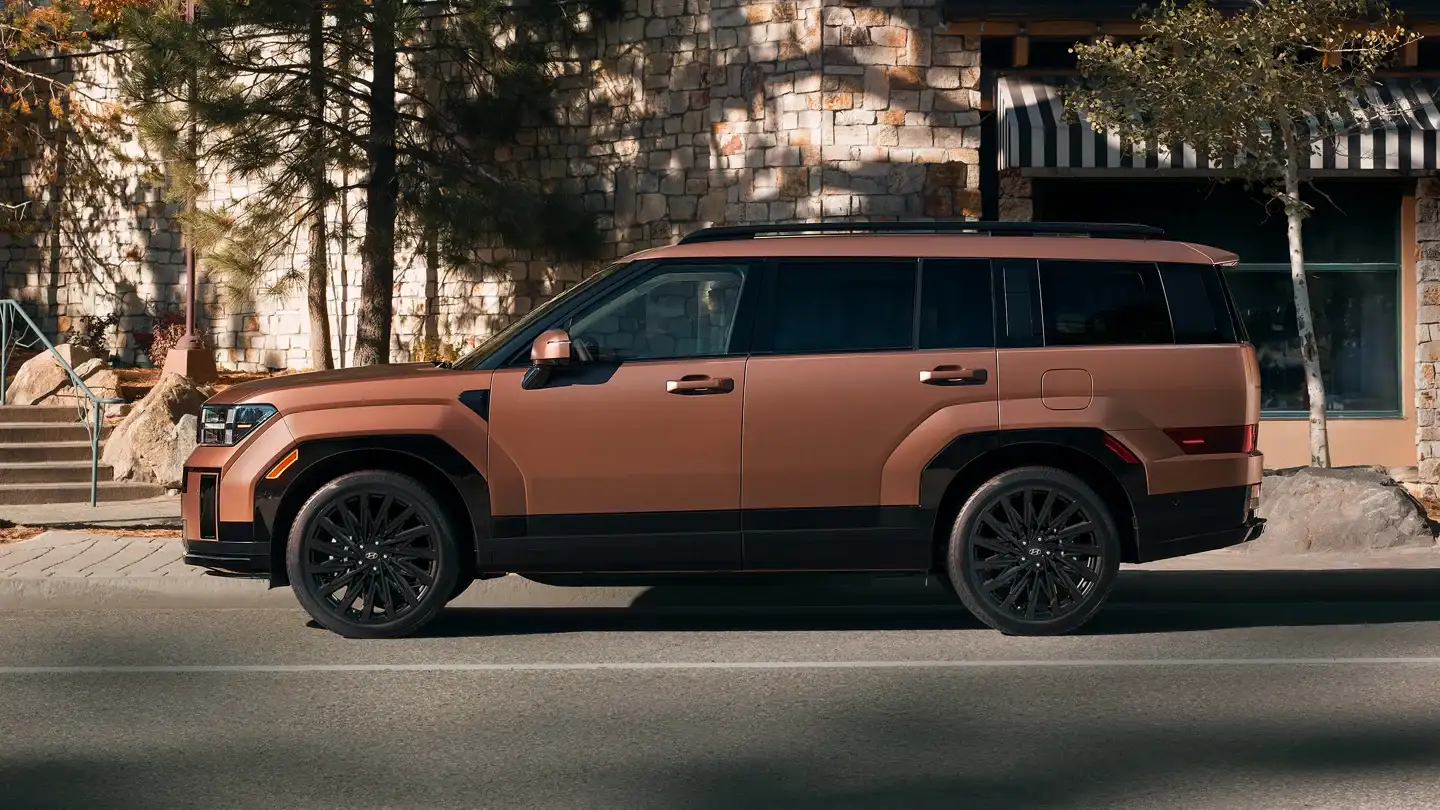
Thanks to its incredibly clever interior packaging, highly distinctive design, and overwhelmingly compelling value, the Hyundai Santa Fe remains firmly cemented among the absolute best mainstream three-row family SUVs on the market today. When the radically redesigned, boxy Santa Fe debuted, it turned heads everywhere from the streets of New Bern to highways across North Carolina. However, even the best vehicles have room for improvement. For previous iterations, the unrefined eight-speed dual-clutch automatic transmission never quite suited the family-hauler mission of the vehicle.
For the 2026 model year, Hyundai listened to driver feedback and made a highly anticipated mechanical swap. Out goes the dual-clutch unit, and in comes a more conventional, remarkably smooth eight-speed torque-converter automatic transmission. To see exactly what kind of difference this new gearbox makes to the SUV’s driving manners, everyday livability, and overall performance, we took a deep dive into the 2026 Hyundai Santa Fe, specifically in its rugged, off-road-themed XRT guise.
A Darn Fine Box: The Exterior and Interior Packaging
Introduced initially for the 2024 model year, the latest generation of the Santa Fe quickly earned our respect and admiration. Its offbeat styling seamlessly integrates clever details and interesting signature lighting. Sure, the design borders on weird for those accustomed to the sleek, sloping curves of traditional crossovers—and in white paint, it can admittedly resemble a high-tech refrigerator—but that unapologetically boxy shape serves a very specific, highly functional purpose: it maximizes interior space to an extraordinary degree.
But respect isn’t always love, and we firmly believe in being transparent with our Hyundai of New Bern customers. Some of the previous Santa Fe’s driving manners left us wanting slightly more refinement. While we’ve been incredibly impressed with the Hybrid version for its stellar fuel economy, it isn’t a powerhouse. Models equipped with the standard gas engine are notably quicker, but we had specific issues with the outgoing dual-clutch transmission (DCT). The main culprits were a slow, occasionally stuttering engagement that made takeoffs from a stoplight feel lurchy, combined with an occasional, nerve-wracking rollback on inclines. When you have a family loaded in the back, smooth predictability is paramount.
The Big Upgrade: Out With the DCT, In With the Traditional Automatic
Drivers shouldn’t have to work around quirky mechanical behaviors during their daily commute. To cut straight to the chase: The new transmission completely fixes those previous gripes. Simply put, it works exactly like a normal, traditional automatic transmission should, and it transforms the everyday driving experience of the 2026 Santa Fe.
Release the brake pedal, and the SUV immediately and predictably creeps forward. Press the gas pedal, and it rolls into its power band naturally and effortlessly. While the gear shifts might not be as razor-crisp as the outgoing dual-clutch transmission—which was born from sports car technology—they are adequately smooth and perfectly suited for a three-row family vehicle.
If there is any minor complaint to be found with the new gearbox, it’s that manual inputs to the steering-wheel-mounted paddle shifters are slightly delayed. However, manual shifting mode isn’t likely a major concern or a frequently used feature for the vast majority of Santa Fe drivers navigating their daily routines.
Driving Dynamics: The Same, But Noticeably Better
With its new transmission equipped, the 2026 Santa Fe is undeniably better to drive. However, it is important to ground our expectations in reality: how it drives isn’t necessarily the primary reason it is worthy of our high recommendation. Generally speaking, the experience from behind the steering wheel leans toward the relaxed rather than the thrilling.
The steering is effortlessly lightweight, which makes parking lot maneuvers a breeze, but it is somewhat numb. It isn’t too slow to react, but a bit more heft and tactile texture could significantly improve the feeling of precision; there is a slight vagueness that sometimes takes a bit of guesswork and minor correction to point the front wheels exactly where you intend them to go. Similarly, the brake pedal features a long and soft travel. That particular tuning makes gradual, perfectly smooth stopping incredibly easy—great for preventing spilled coffees—but again, a firmer pedal feel would be preferable for driver confidence. Needing to slow down suddenly doesn’t always mesh perfectly with this spongy tuning.
Even with the new, smoother transmission, the engine delivers its power in a very relaxed manner. The robust turbocharged 2.5-liter inline-four engine makes a healthy 277 horsepower and 311 lb-ft of torque. However, that power arrives eventually rather than instantly. It needs to be coaxed out of the engine bay, and the new transmission’s tendency to eagerly choose higher gears in an effort to optimize highway fuel economy is undoubtedly a contributing factor to this relaxed demeanor. Switching the SUV into Sport mode makes the engine noticeably more responsive, holding gears a bit longer, but power delivery is still far from neck-snappingly immediate.
What it lacks in aggressive sportiness, it more than makes up for in pure comfort. The Santa Fe’s suspension expertly keeps the heavy body controlled over road bumps, potholes, and highway undulations. This is especially true in the XRT version we tested. Road chatter and imperfections are soaked up beautifully, largely because the XRT’s thick Continental TerrainContact all-terrain tires provide a significant amount of additional cushioning compared to the lower-profile rubber found on other Santa Fe variants.
Despite its rugged, off-road-inspired looks, most drivers will keep the Santa Fe XRT on the pavement. Like many similar “cosplaying” crossovers on the market, this isn’t a serious, locking-differential rock-crawler. That said, Hyundai’s XRT trim level has consistently proven highly capable on rural dirt roads, muddy campsite trails, and moderate terrain.
By the Numbers: 2026 Santa Fe XRT Performance
At the test track, the new transmission seems to have enabled slightly quicker, more consistent acceleration. While chunky all-terrain tires—like the ones the XRT is equipped with—can typically have a harder time maintaining on-road traction during hard, wide-open-throttle launches, the XRT’s modest power delivery and highly effective all-wheel-drive system kept wheelspin perfectly in check.
The 2026 Santa Fe XRT hit 60 mph from a standstill in a respectable 6.9 seconds. That is notably quicker than the 7.4 seconds recorded for a 2024 Santa Fe riding on standard all-season tires (for context, the Hybrid model clocked in at 7.6 seconds). In the quarter-mile drag, the new XRT ran a 15.1-second time at 93.0 mph, successfully edging out both the older dual-clutch-equipped gas model and the Hybrid variant by a few tenths of a second and a few miles per hour.
When it came to braking, the XRT stopped from 60 mph in exactly 120 feet. That is a full 5 feet shorter than the 2024 Santa Fe Calligraphy. That result is somewhat unexpected given the open, chunky tread blocks of the all-terrain tires, but it is important to note that the luxury-focused Calligraphy model weighed about 130 pounds more than our XRT tester. Limit handling is another area where the inherent drawbacks of tall all-terrain tires can show. The XRT managed 0.73 g on the skidpad. These are completely expected, unexceptional results from a family-focused SUV of this size and stature.
It’s What Is Inside That Truly Counts
Rather than raw track performance, where the 2026 Hyundai Santa Fe truly stands out is in how spectacularly well it functions as a tool for daily life. Its third row isn’t exceptionally large—it is best reserved for children or short trips—but access to it is incredibly easy. Every single row provides occupants with an abundance of cupholders, fast-charging USB ports, and generous, airy views out of the massively scaled side windows.
Throughout the spacious cabin, it’s as if Hyundai’s interior design team put a storage cubby or shelf everywhere they physically could. Up front, the passenger is treated to dual glove boxes bisected by a handy storage shelf. Furthermore, the dual-opening center console bin features a brilliant drawer that allows items to be slid back directly to second-row passengers.
Technology is front and center. Two wireless phone chargers sit out in the open on the center console for incredibly easy device placement. Dominating the dashboard is a sweeping 12.3-inch infotainment touchscreen that runs Hyundai’s highly user-friendly—if not bleeding-edge—user interface. However, directly below that screen sits what is potentially the Santa Fe’s most polarizing feature: a touch-sensitive control panel utilized for most climate functions. It requires precise physical taps to operate and lacks the tactile feedback of a physical button, which unfortunately requires the driver to glance away from the road to adjust the AC. Thankfully, Hyundai had the good sense to retain some physical, knurled knobs and traditional buttons for audio volume and other basic, frequently used controls.
A potential aesthetic drawback of the rugged XRT version is that it is currently available exclusively with an all-black interior. This is a stark contrast to other Santa Fe trim levels that offer bright gray or rich brown upholstery options. The black looks perfectly fine and hides dirt well, but it is undeniably monochromatic. Still, like every Santa Fe in the lineup, this sub-$45,000 midrange XRT version is a remarkably compelling value: it is comprehensively equipped, built with high-quality materials, and serves as a highly effective, comfortable family SUV.
Safety and Driver Assistance
The driver assist functions are operated by easily accessible, physical controls located right on the steering wheel. These systems work quite well in the Santa Fe, as they traditionally do across the modern Hyundai lineup. While we noted that the lane-keep assist could perhaps be a touch more precise in its centering, the adaptive cruise control’s automated acceleration and braking in highway traffic are phenomenally smooth. The interior eye-tracking monitor can occasionally be an annoying nanny, but it serves a crucial safety purpose and actually allows for extended periods of relaxed, hands-off driving assistance in slow, stop-and-go highway traffic.
The Verdict
The 2026 Hyundai Santa Fe’s new traditional automatic transmission doesn’t radically transform the vehicle into a performance machine. Likewise, the carryover interior maintains the exact same excellent, family-friendly functionality it debuted with. Nevertheless, by ironing out the quirks of the old dual-clutch gearbox, the revised 2026 Santa Fe makes incredibly welcome, tangible improvements to daily refinement and overall drivability. It takes an already fantastic SUV and makes it definitively better for the roads of New Bern.
2026 Hyundai Santa Fe XRT Specifications
| Base Price | $43,640 |
| Price As Tested | $44,380 |
| Vehicle Layout | Front-engine, AWD, 7-passenger, 4-door internal combustion SUV |
| Powertrain | 2.5L turbo, direct-injected DOHC 16-valve I-4 |
| Power | 277 hp @ 5,800 rpm |
| Torque | 311 lb-ft @ 4,000 rpm |
| Transmission | 8-speed automatic |
| Curb Weight (F/R Dist) | 4,279 lb (55/45%) |
| Wheelbase | 110.8 in |
| Length x Width x Height | 190.2 x 74.8 x 67.7 in |
| Tires | Continental TerrainContact A/T 245/60R18 105H M+S |
| EPA Fuel Economy (City/Hwy/Comb) | 19 / 25 / 21 mpg |
| EPA Range | 372 mi |
| 0-60 MPH | 6.9 sec |
| Quarter Mile | 15.1 sec @ 93.0 mph |
| Braking, 60-0 MPH | 120 ft |
| Lateral Acceleration | 0.73 g |
0 comment(s) so far on 2026 Hyundai Santa Fe XRT: Smoother, Quicker, and Ready for New Bern Adventures